


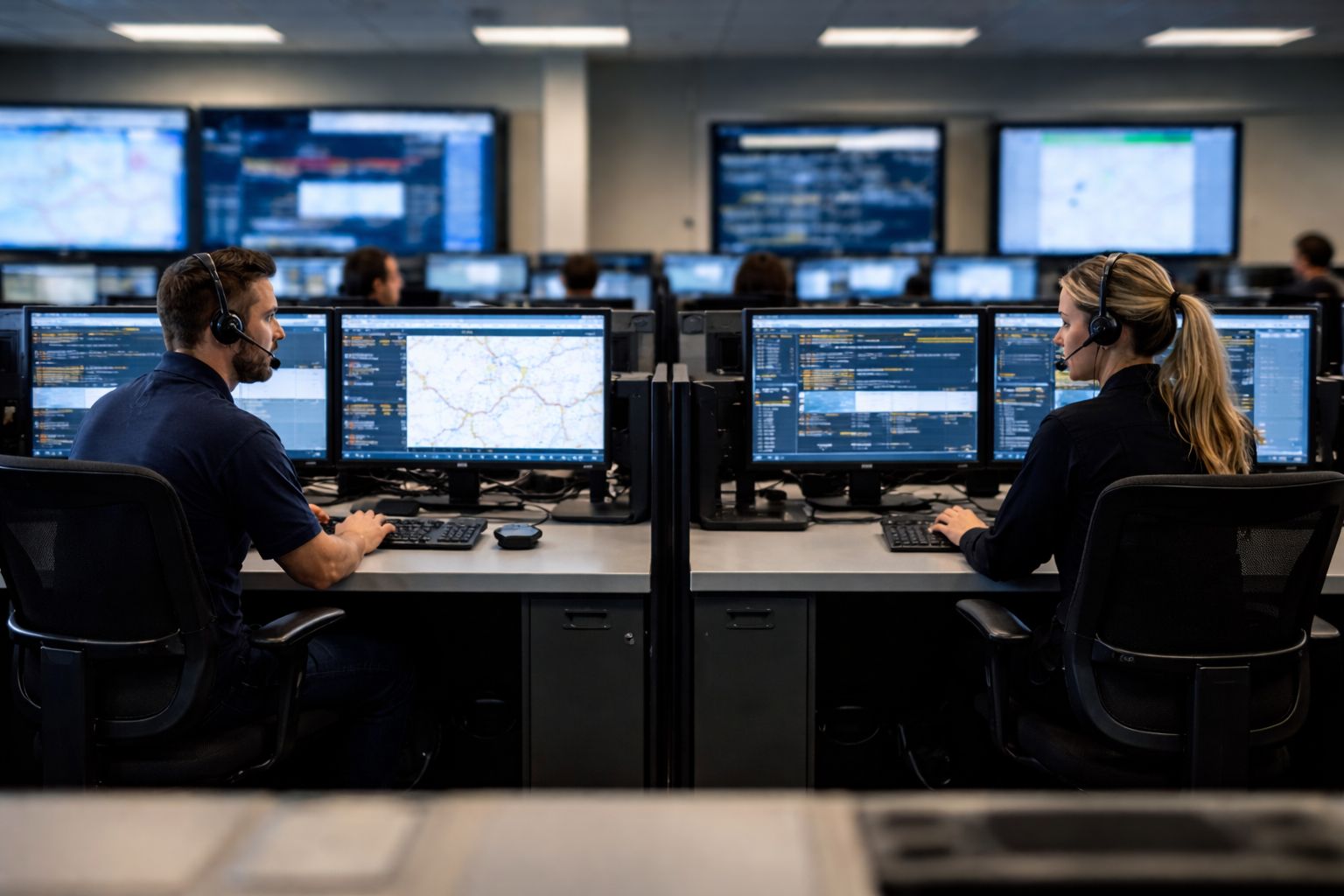
As we mark National Public Safety Telecommunicators Week, we take a closer look at the people behind the headsets—the calm, steady voices who answer the call when it matters most. Often unseen, telecommunicators play a critical role in every emergency response, acting as the first point of contact and a vital link between the public and first responders
To better understand the realities of this role, we spoke with Randy, a 911 / Fire & Enforcement Telecommunicator with two and a half years of experience in the dispatch center.
“I’m a 911/Fire and Enforcement dispatcher, and I’ve been doing this for about 2.5 years.”
Randy describes a fast-paced environment where no two calls are ever the same. Each shift can bring a wide range of situations—from routine incidents to high-stress emergencies that require immediate coordination and clear communication.
When asked about the most challenging part of the job, Randy was quick to respond:
- “Calls involving injured or hurt children are the most difficult. In those moments, I focus on staying grounded in my role—being the helping voice on the other end of the line.”
Despite the emotional demands, Randy says the sense of purpose remains strong. Every call is an opportunity to make a difference, even in the most difficult circumstances.
- “Every fire-related call is a reminder of why we do this. We help by staying calm, getting the right units moving, and making sure responders have the critical information they need.”
The role requires a unique combination of technical skill and emotional resilience. Telecommunicators must process information quickly, manage multiple systems at once, and maintain composure under pressure—all while supporting callers who may be experiencing one of the worst moments of their lives.
- “Multitasking, managing stress, teamwork, fast and accurate typing, emotional resilience, and strong situational awareness,” Randy explained, highlighting the core skills needed to succeed in the position.
Inside the dispatch center, teamwork is essential. Operators constantly monitor activity around them, ready to step in and support one another at a moment’s notice.
- “We stay aware of everything happening in the room and step in wherever needed—whether that’s call-taking, radio, or supporting each other however we can.”
That behind-the-scenes collaboration ensures that no call goes unanswered and that every response is handled as efficiently and effectively as possible.
Randy also shared a message for the community—one that can significantly impact response times during emergencies.
- “We’re here to help. The biggest thing callers can do is answer questions in the order they’re asked so we can get help to you as quickly as possible.”
While the work often happens out of the public eye, its impact is felt in every coordinated response, every dispatched unit, and every life helped along the way.
Behind every emergency response is a voice like Randy’s—working quietly and professionally to bring order to chaos, one call at a time.
During National Public Safety Telecommunicators Week, we extend our sincere appreciation to Randy and all members of our dispatch team for their dedication, professionalism, and unwavering commitment to public safety.